When schools evaluate technology, the conversation often centers on features, integrations, reporting, and security. While those capabilities matter, one factor has an even greater impact on long-term success: user experience (UX).
A Student Information System (SIS) can offer every feature imaginable, but if it's difficult to navigate, staff won't use it efficiently, families become frustrated, and schools fail to realize the full value of their investment.
As schools rely more heavily on technology to manage operations, communication, and student services, user experience has become a strategic advantage—not just a design feature.
Every User Experience Matters
School technology serves administrators, teachers, students, and families. Each group has different needs, but they all benefit from software that is intuitive, consistent, and easy to use.
Poor user experience often leads to:
- Lower user adoption
- Increased support requests
- Inefficient workflows
- Data entry errors
- Frustration for staff and families
By contrast, well-designed platforms reduce training time, streamline daily tasks, and improve productivity across the entire school community.
The Parent Experience Shapes School Perception
For many families, the parent portal is the school's digital front door.
Whether completing enrollment, checking attendance, making payments, updating student information, or receiving school communications, every interaction influences how organized and responsive a school appears.
An intuitive Parent Portal and Student Information System helps schools:
- Increase family engagement
- Simplify enrollment and communication
- Reduce confusion and support requests
- Keep families informed and connected
When technology is easy to use, families are more likely to stay engaged throughout the school year.
Better User Experience Creates More Efficient Schools
Administrative staff spend hours each day inside school software. Even small usability improvements can save significant time over the course of a school year.
Effective School Management Software should provide:
- Simple navigation that makes information easy to find
- Logical workflows that match how schools actually operate
- Clear reporting that supports faster decision-making
- Consistent design that reduces the learning curve
- Mobile accessibility so staff can work from anywhere
When technology removes friction instead of creating it, educators spend less time managing software and more time supporting students.
Why UX Matters in a Student Information System
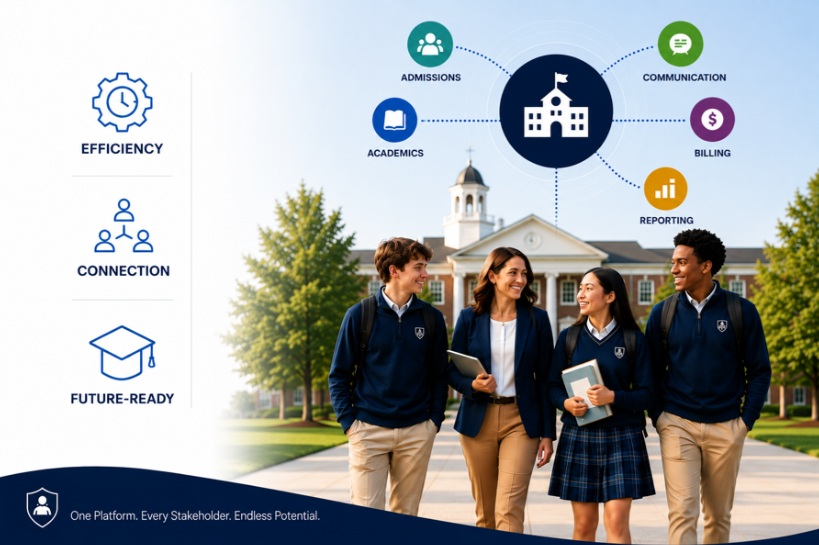
The Student Information System is the operational hub of a school, managing everything from attendance and grading to enrollment, communication, and student records.
Its value isn't determined by the number of features—it depends on how easily people can use them.
An intuitive SIS helps schools:
- Improve enrollment management
- Strengthen student data management
- Increase adoption across departments
- Improve communication with families
- Provide faster access to critical information
The best systems balance powerful functionality with a user experience that encourages everyday use.
User Experience Drives Adoption
Technology succeeds only when people actually use it.
Even feature-rich platforms struggle if they are difficult to learn or navigate. Intuitive design increases confidence, reduces training, lowers support demands, and encourages consistent use across the entire school community.
When adoption improves, schools realize greater returns from their technology investments.
Final Thoughts
Schools don't simply need software with more features—they need technology that makes everyday work easier.
As schools evaluate Student Information Systems and other education technology solutions, user experience deserves equal consideration alongside functionality, security, reporting, and integrations.
The best platforms don't just manage school operations—they simplify them, empowering administrators, teachers, students, and families to spend less time navigating technology and more time focused on student success.