Every morning, school leaders begin the day the same way. They open dashboards. Review reports. Respond to emails. Prepare for meetings. Answer questions from faculty, families, and students. Before the day has fully begun, dozens of decisions are already competing for their attention.
Yet despite having more information than ever before, many leaders still begin with one important question: What deserves my attention first?
That isn't a technology problem. It's a leadership challenge.
Leadership attention is the one resource every school depends on but can never create more of. Budgets can grow. Enrollment can increase. Teams can expand. But no school leader gets more than twenty-four hours in a day.
The challenge isn't collecting more information. It's knowing where to focus.
As artificial intelligence becomes part of school operations, much of the conversation has centered on what AI can do. It can summarize reports, answer questions, and retrieve information almost instantly. Those capabilities matter—but they're only the beginning.
The next generation of school technology won't be measured by the number of features it offers. It will be measured by the quality of thedecisions it helps leaders make.
Schools Don't Need More Information
Schools have invested in technology to collect, organize, and report information. Dashboards are more sophisticated, reports are easierto generate, and data is more accessible than ever.
Yet leadership teams still spend valuable time searching for answers—not because the information doesn't exist, but because it's scattered across reports, departments, and disconnected systems.
Technology has become very good at telling us what happened. The next generation of school technology should help leaders understand why it matters and where they can make the greatest impact.
AI Should Do More Than Read Data
Imagine beginning your day with reports covering attendance, academics, admissions, finance, family communication, and student behavior.
Each report contains valuable information. None tells the whole story.
Now imagine your technology recognizes declining attendance, slipping grades, reduced family communication, and a recently overdue tuition balance.
Viewed separately, those details may never stand out. Viewed together, they reveal something important.
That isn't simply reading data. It's recognizing relationships. It's understanding context. It's helping leaders identify what deserves their attention before a small concern becomes a significant challenge.
Reading data tells leaders what happened. Understanding relationships helps them know what to do next.
The purpose of AI isn't to generate more reports. It's to help leaders spend less time searching for problems—and more time solving them.
The Cost of Decision Fatigue
School leaders make hundreds of decisions every week. Most aren't major strategic decisions—they're operational ones.
- Which family needs a personal call?
- Which student should receive additional support?
- Which report requires immediate attention?
- Which department needs assistance today?
Individually, these decisions seem small. Collectively, they consume one of a leader's most valuable resources: attention.
The best technology doesn't create more decisions. It reduces unnecessary ones by surfacing meaningful insights instead ofoverwhelming leaders with information.
Why Context Changes Everything
Think about two conversations.
One person tells you a student missed three days of school.
Another tells you the same student missed three days, grades have declined, family communication has slowed, and teachers have noticed achange in classroom engagement.
The first is information. The second is understanding. That's the power of context.
At Graphite Education, we call this Contextual Intelligence.
It's AI's ability to understand not only individual pieces of information, but how they relate within the unique environment of a school.
Context transforms information into understanding. Understanding leads to better decisions, and better decisions lead to betteroutcomes for students, families, and staff.
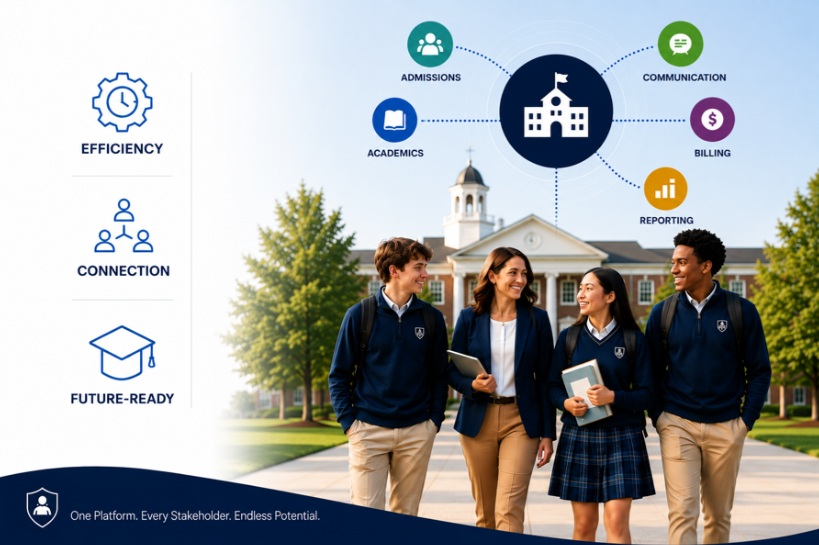
Artificial intelligence becomes far more valuable when it understands how information connects across the school instead of viewing eachreport independently. Attendance influences academics. Communication affects family engagement. Financial information can provide additional insight into afamily's circumstances. Admissions, enrollment, and student success are often more connected than they appear.
When technology understands those relationships, it moves beyond answering questions. It begins revealing what matters most—and why.
That is the difference between information and meaningful insight.
Better Decisions Start with Connected Information
Great school leaders will always rely on experience, relationships, and professional judgment. Artificial intelligence isn't replacing those qualities—it's strengthening them.
By reducing the time spent gathering information, comparing reports, and connecting details across departments, technology gives leaders something increasingly valuable:
- Time to lead
- More time coaching teachers
- More time supporting students
- More time engaging families
- More time planning for the future
Technology should never compete for a leader's attention. It should protect it.
A New Standard for School Technology
Over the next several years, nearly every education technology company will offer artificial intelligence. Having AI will no longer be the differentiator.
The more important question is: Does this technology help our leadership team make better decisions?
The schools that thrive won't necessarily be the ones with the most software, dashboards, or reports. They'll be the schools whosetechnology helps leaders recognize opportunities sooner, respond more quickly, and focus on what creates the greatest impact.
Final Thoughts
Every school has data. Every school has reports. Soon, nearly every school will have AI.
The schools that lead the next decade won't be defined by how much information they collect. They'll be defined by how effectively they turn information into action.
Leadership has never been about knowing everything. It's about knowing what matters most.
At Graphite Education, we believe AI should do more than answer questions. It should help schools connect the dots across every aspectof school operations, transforming everyday information into meaningful insight so leaders can make better decisions with greater confidence.
Schools will always need great leaders. The next generation of technology won't replace them—it will help them lead with greater clarity,confidence, and focus.
Every morning, school leaders ask, "What deserves my attention first?"
The best technology won't answer every question. It will help them answer that one.
Because the most valuable resource in any school isn't its data. It's the attention of the people who lead it.